Complex embedded systems
Engineering complex embedded systems
Complex embedded systems bring multiple technical disciplines together within one architecture. Processing, interfaces, memory, software and programmable logic must work together while meeting requirements for performance, reliability and power consumption.
TOPIC approaches these systems at architecture level, where technical choices can be balanced before individual components are developed.
Balancing hardware and software
Not every processing task belongs on the same platform.
Time-critical and parallel operations can benefit from FPGA logic, while processors are better suited to dynamic control and application software.
TOPIC combines hardware, FPGA and embedded software expertise to distribute these workloads effectively and avoid unnecessary complexity.
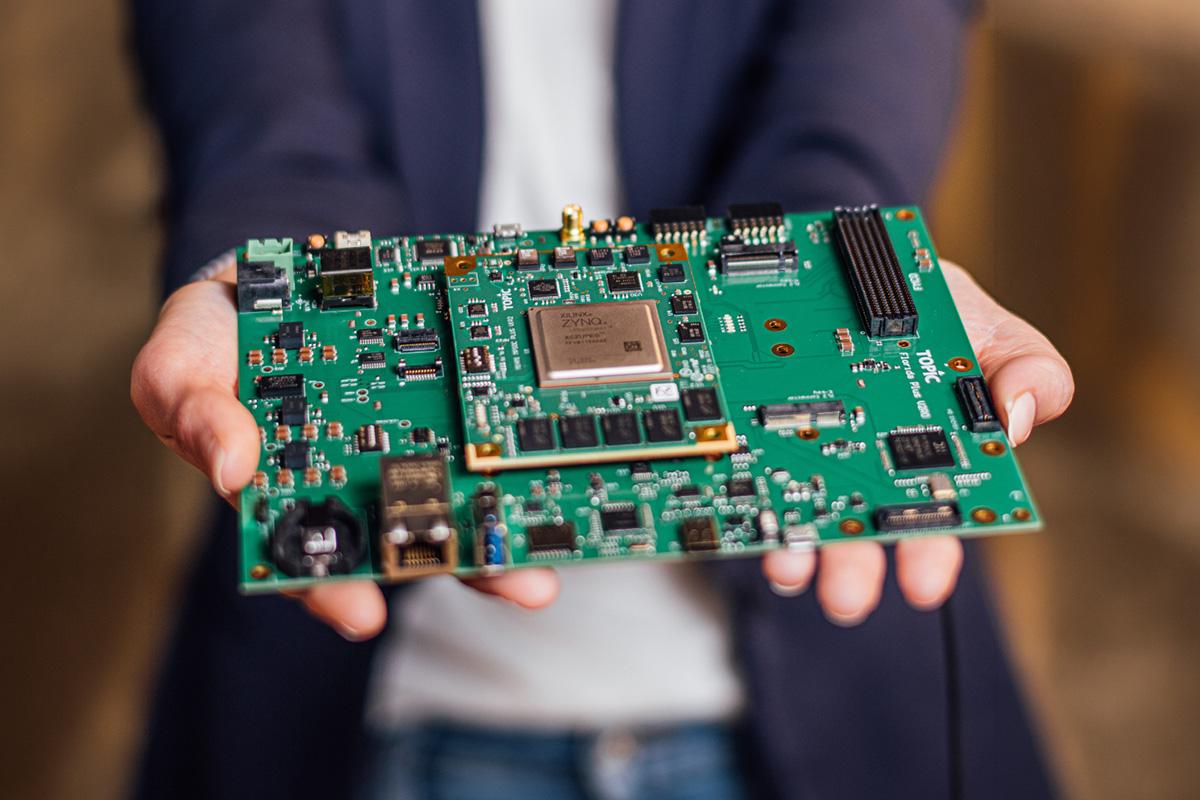
Managing constraints
As systems become more demanding, individual design choices increasingly affect the complete architecture.
Higher processing performance can increase memory bandwidth, data traffic, power consumption and thermal load.
TOPIC is specialised in high performance embedded computing and considers these dependencies together. Signal integrity, high-speed interfaces, power delivery and thermal behaviour are addressed alongside the required processing performance.

From architecture to reliable system
Developing complex embedded systems means maintaining control over the complete design as technologies and requirements come together.
By combining system architecture, board development, FPGA and embedded software, TOPIC creates platforms in which each discipline supports the same goal:
Reliable performance within the constraints of the final application.